If you’re ready to continue our journey back to Victorian MBC and the happenings in Meersbrook on Shirebrook Road, then read on my worthy reading companion!
Ian. C
Goodbye Mr Sanderson, Hello Mr Sanderson!
It would seem that our Mr Edmund Sanderson wasn’t shrewd enough to beat the one thing that beats us all, Old Father Time. He was present at the November 1878 committee meeting and had become a member of a sub-committee created to organise another billiards tournament, but in the minutes of the December meeting we find the following:
Present, Messrs Hoyland, Walker, Cliff, Hall, Fell, Dorecourt, Linley, Labon and Fairmaner.
Resolved on the motion of Mr Hall seconded by Mr Dorecourt that in consequence of the death of Mr Sanderson, Mr Hoyland is President for the remaining year.
Resolved on the motion of Mr Hoyland seconded by Mr Linley that the following resolution be forwarded by the Secretary to Mrs Sanderson.
“That the committee learn with deep regret the loss not only they, but the members of the club have sustained in the lamentable death of the late President Mr E. Sanderson, who from the foundation of the Meersbrook Bowling Club was a member of the committee and an ardent and indefatigable worker in the interests of the institution.”
The committee also resolved to approach a Mr Richard Smith to arrange a portrait of Mr Sanderson as he was held in such high regard. Unfortunately, we do not have possession of this portrait today.
We salute and thank you Edmund Sanderson, without you we would not have the enviable location or building of the Bowling Club or the room for both snooker tables.
The Sanderson family influence does not end there, however. His family also had a major involvement in these early years of the club’s history, and we can assume they had also taken control of the family accountancy firm. Another Edmund H Sanderson, presumably the eldest son joined the committee at the AGM in 1879, the year following his Fathers passing. Edmund H Junior also went on to become Chairmen and President, following in his Father’s footsteps. Also, during 1881 an A Sanderson also appears in the list of committee meeting attendees, although in what capacity he served it did not say and by 1883 there is no further mention of the name.
To Roll or not to Roll? That is the question!
The two most frequent topics for discussion at the meetings of the committee were the Steward and the members subscriptions. References to the Steward were mostly instructions such as: Rolling the green; providing bills of fare for the many dinners and social occasions; and policing that no non-members use the club or club facilities. We have seen previously that we occasionally glimpse the human faces behind the minutes. For example, in a special committee meeting on the 7th of April 1879 which was held for the purpose of inquiring into the conduct of the steward in not rolling the green. The steward was called into the room and was deemed to “not having satisfactorily explained his neglect” it was unanimously resolved by the committee that he be given “one months notice to leave their service for disobedience in not carrying out their instructions!”
Eight days later another special committee meeting was held for the purpose of considering the advisability or otherwise of rescinding the resolution passed on the 7th of April, the secretary read the following letter:
To the Secretary and Committee of Heeley, Meersbrook Bowling Club.
Gentlemen,
I take the great liberty asking you to kindly reconsider your decision in reference to the notice to quit given to me by you. I beg to assure you that I was under a total misapprehension in reference to your orders as to the rolling of the green on last Saturday. I rolled the green on Monday and beg to suggest that my being married on Thursday might possibly cause me to misunderstand your orders. I may also say that I should be very foolish to wilfully risk a situation when only just entering into the great responsibility of being married. If you would give me another opportunity by allowing me to continue as your steward I promise you shall have no occasion to complain in the future either in reference to the green or any other cause.
I remain, Your obedient servant,
Charles Boler
Having read Mr Boler’s letter, invited him into the room once more and interrogated him further, the minutes state. “After considerable discussion it was unanimously resolved that the resolution passed on the 7th April 1879 be rescinded and the Steward be reinstated.”
The first interesting point to note here is that in the original minutes when Mr Boler was offered the job of steward in 1874 the minutes said that “Mr Boler and his wife” be offered the post. This begs the question, what happened to Mr Boler’s first wife? He stated in his letter above that he had got married recently, there is no mention of the first name of the first or second Mrs Boler, so we can’t be sure if this was just a typing error or if he had indeed got married for a second time.
Secondly, there seemed to be an interest at this time in levelling the bowling green. Modern greenkeepers and bowlers alike will testify in current times the use of rollers is rarely if ever utilised, yet here we are having an employee nearly losing his livelihood for not carrying this out.
This also comes on the back of other work to alter the green around this time, the meeting minutes from 25th October 1878 list the resolution of a motion to award “the sum of three pounds to Mr E.H Sanderson for the purpose of levelling and relaying certain portions of the Bowling Green in accordance with his proposal.”
As a bowler myself who has spent time working on the green, I can only now wonder what interesting and tricky playing features were levelled out and potentially lost at that time.
All those many management decisions along with bowling, billiards, card playing and socialising activities obviously necessitated the need to enjoy a nice cigar afterwards! At the same meeting the motion was carried to order the following from Duncan Gilmour, a local wine and spirit merchant in Sheffield:
12 boxes of cigars at 2” & 3 boxes at 3”
The club was also purchasing wine and spirits from Gilmour’s at this time, but unlikely beer, as officially they didn’t start brewing until 1884 at their Furnival Brewery. Gilmour’s more famously moved to the famous Lady’s Bridge Brewery near the Wicker in 1900 and brewed there and their Merseyside brewery until being bought out by Joshua Tetley’s in 1954. More recently people will remember Whitbread’s took over operations at Lady’s Bridge until its closure in the 1990’s.
Mr Boler redeemed!
It seems that Mr Boler’s promise to give the committee no occasion to complain in the future was to be fulfilled. At the same AGM that E.H Sanderson Jnr joined the committee there is also listed one Mr Charles Boler as a new member of the Committee!
What is unclear from the minutes is how long Mr Boler continued in his role as Steward, but it appears he certainly did immediately after his rolling indiscretion. It seemed in the following weeks as though things had settled down a bit, with business as usual returning to organising opening dinners and trying to ensure these went smoothly. Another World-famous Sheffield company, Messr’s Mappin & Webb, the Cutlers, were contacted to purchase “4 dozen table knives and 2 dozen desert knives” These would be worth a pretty penny today I’d bet.
During April 1879 as Mr Boler carried on as Steward, it seems he wasn’t completely off the hook. Minutes from a general committee meeting on the 24th of April 1989 stated that “the Steward be asked to send a detailed account of quantities of earthenware supplied to the club up to the present date as the committee consider the annual charges to be excessive!” It was also resolved that Mr Labon and Mr Dorecourt take an account of the stock in the cellar and on the Steward’s hands, so the committee were certainly taking a keen interest in club operations at that time. The AGM that Mr Boler and E.H Sanderson joined the Committee was held on the 14th May 1879 and after this we start to see Mr Boler’s name on meeting minutes.
Two months later the committee, including Mr Boler, considered a report from the Steward on the behaviour on Messrs George Wragg, Thomas Cadman, and Jonathan W Bell who stayed in the saloon until 12:35 am on the 9th June, and insulted the Steward when he attempted to carry out his duties. If only the walls could tell us the nature of this scandalous behaviour!
It would seem strange that Mr Boler is named as a committee member but not named as Steward. If he was reporting on such misdemeanours as part of his Steward’s role, it could be because of his newfound responsibilities as committee man, and the watchful eye of his peers that he was perhaps being ultra-attentive. At the next committee meeting it was resolved to hang a notice in the saloon respectfully informing members that no refreshments will be provided after 11:45 pm and all games must be finished by midnight and that the Steward may “turn down the gas preparatory to closing the club” as near to that time as possible.
Another founding Father of MBC leaves the story at this time. In the September 1879 meeting it is reported that Mr Joseph Sales Labon was to resign his position as Honorary Sectretary as he was off to reside in sunny Bridlington! The resolution was unanimously passed that the best thanks of the Committee be given to him for past services and wish him every future success, Mr Fairmainer was to take on the role of Secretary.
Please Sir, can I have some Mower?
This section may be of particular interest to not only bowlers but professional and amateur greenkeepers amongst our members and visitors.
As well as indiscretions with the rolling of the bowling green there are several references throughout the minutes to issues with the ‘grass cutting machine’. Generally, they reference it needing some sort of repair and MBC seemed to be keen to keep up to date with the relatively new technology of the gear or chain driven lawn mowing machine.
The lawn mower had been invented in 1830 by Edwin Beard Budding, an Engineer from Stroud in Gloustershire, after seeing cloth cutting machines in cloth mills. By the 1850s, Budding’s early patents had lapsed, and other companies were able to introduce their own machines. Around this period, Thomas Green and Son of Leeds introduced a mower called the ‘Silens Messor’, meaning silent cutter. It seems that MBC had a Thomas Green machine as the minutes of 4th April 1879 state:
“Resolved on the motion of Mr Cliff, seconded by Mr Linley, that the lawn mower be sent to Mr Thomas Green & Son, Leeds for repairs.
Thomas Green & Son – Silens Messor circa 1860.

Whether these repairs did not take place or were not successful is not clear, but by the meeting on 28th May 1880 we find the following;
“Resolved on the motion of Mr Sanderson, seconded by Mr Boler that an Archimedean Machine be purchased from Mr Linley at the price of £5 & 10 shillings, for cutting the grass of the Green.”
Mr Cliff and Mr Hand suggested that “the old grass cutting machine be sold for the best price that can be got for it”.
The Archimeadean Machine is an intriguing sounding name, but it was not just a fanciful name assigned by a Victorian MBC Committee member, it was actually the latest technology in mowers. The Archimedean lawn mower was designed in 1869 by Amariah Millar Hills, an American who had a factory in Connecticut. He was the first American to be granted a patent for a lawn mower, in 1868. The name of the mower comes from the shape of the cutting cylinder, which is like an Archimedean screw in being spiral or helical in profile. The mower was innovative through its compact and lightweight design compared with mowers from other manufacturers, and had a solid cast cutting cylinder with just two blades.
The mower was later manufactured for the UK market by Williams and Company of London as sole Agent for Hills, so it is possible Mr. Linley had a Williams machine for sale at the time.
As can be seen from the photographs of the likely models that were used at the Bowling Club, the design of the lawn mower then, is very recognisable today. As someone who has had opportunity to cut a bowling green with modern motorised green cutting machines, I can honestly say I think it would be a fair task cutting one with a push along model even if it was gear or chain driven!
A Williams & Co. Archimedean Mowing Machine

To pay or not to pay? That is another question!
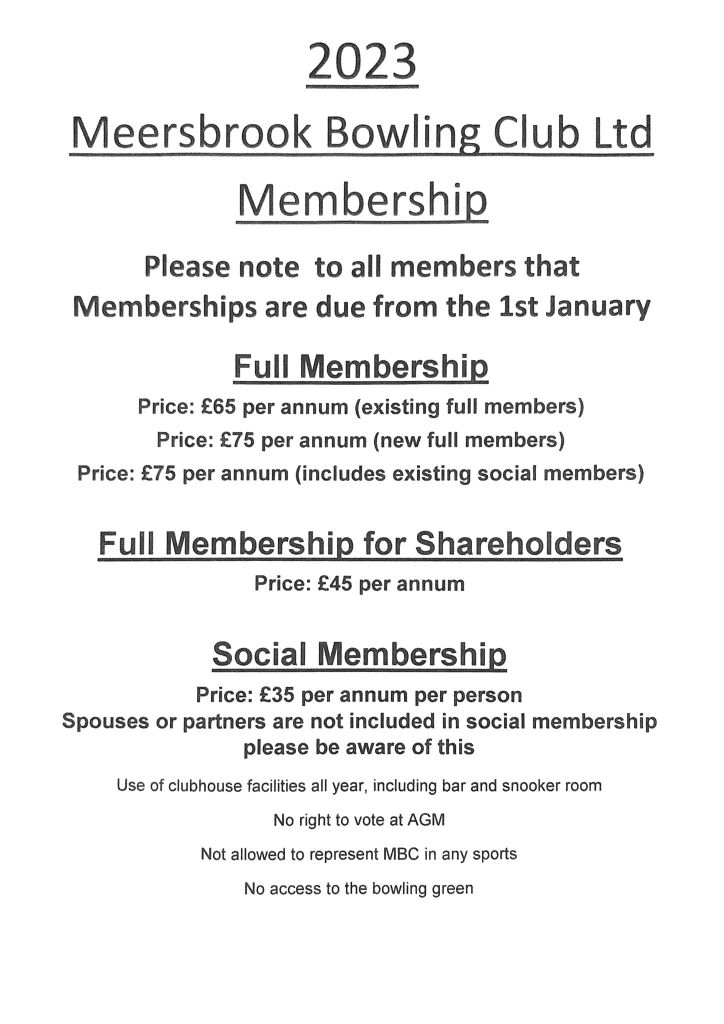
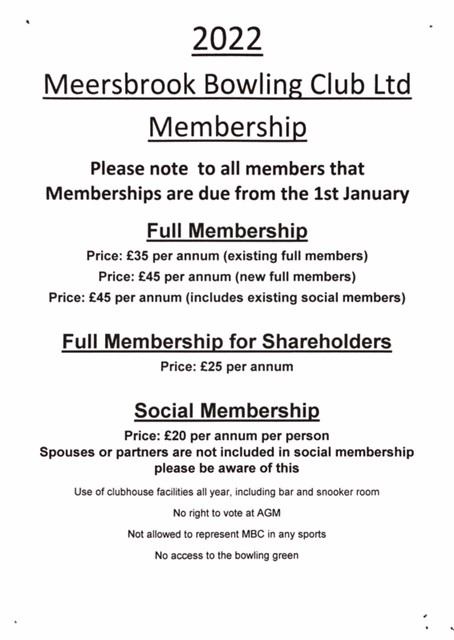
Subscriptions and share subscriptions are a constant regular topic of discussion at this time, usually to get members to pay their dues and demands, which as previously explained included a share subscription. Proposals were made by the Secretary Mr Fairmaner in 1880, to rescind decisions made the previous year where share subscriptions had been reduced from twenty one shillings to 15 shillings, and annual membership had been reduced from thirty shillings down to twenty four shillings. Presumably, the reduction was to encourage payment, but the resolution to rescind these previous decisions was passed unanimously.
The complexity of membership as seen above, along with difficulty collecting subscriptions took an incredibly amount of Committee time, especially the latter, as we shall discover below:
30th November 1877
“The Secretary caused notice in writing addressed to Thomas J Revill of the White Lion, London Road, Heeley. To be sent through the post informing Mr Revill of his neglect in paying his subscriptions due in May.” Mr Revill it seems did not respond and after 28 days the committee moved to resolve that his share “be deemed forfeit and his named erased from the Books of the Club.”
28th November 1879
“Resolved on the motion of Mr Dorecourt, seconded by Mr Hall that the Secretary write to Messrs Thomas Credland, Bramhall, Matthewman, Gillott and the Trustee of Ian Wilkinson that unless their subscription be paid the shares to be forfeited in accordance with article 34
It seems that these letters had the desired effect at least some of the time, although it seems they were not always written and posted immediately either as we see below that Mr Bramhall and Mr Matthewman were still being chased:
7th April 1880
“The Secretary having reported that on the 30th day of January 1880 he caused notices in writing addressed to Mr Henry Matthewman of Alexandra Road Heeley, and John Bramhall of Sheaf Street Heeley, to be sent through the post informing them of their neglect to pay their subscriptions due in May last, and more than twenty eight days having elapsed since such notices were sent. Mr Matthewman and Mr Bramhall having failed to comply with such notices.” Therefore, their shares were also deemed forfeit and their names removed from the record books.
2 march 1881
“The Secretary having reported that on the 31th day of October 1880 he caused notices in writing addressed to Mr Henry Booker of Albert Road Heeley, and Reuben Clarke of The Wicker Sheffield, to be sent through the post informing them of their neglect to pay their subscriptions due in May last, and more than twenty eight days having elapsed since such notices were sent.” Again, Mr Booker and Mr Clarke had their shares deemed forfeit and their names removed from the record books of the Club.
It seems some already mentioned were repeat offenders, more specifically Messrs Credland and Gillott!
28th April 1882
The Secretary had sent the usual notices to: Mr Thomas Credland, Heeley Bridge Heeley; Mr George Dawson, Chipping House Road; Mr John Milner, Trafalgar Street Sheffield; Mr Arthur Gillott, Ecclesall Road Sheffield; Mr Herbert Hodkin, Bramhall Lane Sheffield.
Needless to say Messrs Credland and Gillott must have decided not to pay this time and all the above mentioned had their names removed from the Books and their shares forfeited. This must have seemed a significant fall from grace for Thomas Credland, who we discovered earlier was one of the founding members of the Club’s first committee. With the local area business world connections of the committee members, one wonders if this non-payment could have been damaging for the reputation of the Timber merchant and chimney piece manufacturer from the Heeley Bridge Works
The sharp eyed amongst you might think you have seen a typing error above, however Bramall Lane in those days was still known as Bramhall Lane, named after the Bramhall family, well known file makers, who built the White House on Whitehouse Lane which was to become Bramall Lane. The White House is still there, but now more well known as the Sheaf House public house. It seems the more familiar spelling of Bramall Lane became widely accepted in the late 1880’s.
See you in part four where there is more trouble and strife on the way for the fledgling club!
You must be logged in to post a comment.